2 min read
What is the Tesla Roadster and why can it fly?
Tesla has unveiled the new Roadster with SpaceX-inspired thrusters, claimed sub-second acceleration and a futuristic design. Production is targeted for 2028, with three versions planned, including the extreme Rocket.
By Haji Chakralwale
Updated 12 hours ago
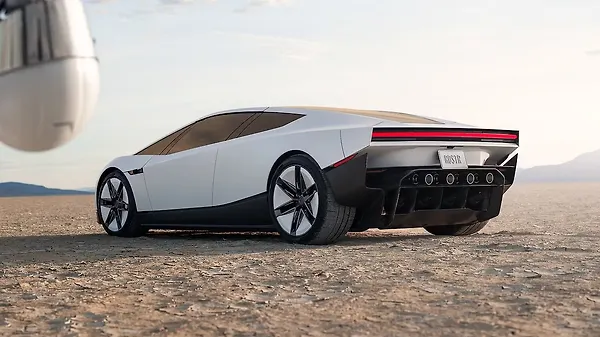
- Tesla’s most aspirational sports car gets SpaceX-inspired thrusters
- Production is targeted to begin in 2028
Tesla has never been one to play by the rules, and the new Roadster is a case in point. Unveiled on 15 October, the electric supercar brings the brand’s SpaceX connection to the road, with acceleration claims that sound almost unreal and thrusters that can lift the car into the air.
The second-generation Roadster was first unveiled in 2017, with Tesla promising a range of nearly 1,000km and blistering performance. However, production was repeatedly delayed, and it is only now that the car has received a major reveal, with production targeted for 2028.
Three versions, one wild idea
The new Roadster will be offered in three versions: Performance, Thrust and Rocket. Tesla claims a 0-100kmph time of around 1.6 seconds for the Performance version, while the Rocket variant is claimed to achieve the same in under a second. The latter is an invite-only version and is not approved for public-road use.
The design is suitably futuristic, with hidden headlights, a full-width rear light bar and flush aerodynamic elements. The styling reportedly draws inspiration from high-performance aircraft, including the SR-71 and F-35.
Inside, the cabin gets a minimalist layout, a yoke-style steering control, digital displays and lightweight materials. The regular versions seat two, while the Rocket makes room for its additional hardware by dropping the passenger seat.
So, how does it fly?
The secret lies in Tesla’s collaboration with SpaceX. The Roadster’s extreme configuration uses cold-gas thrusters that release highly pressurised gas to generate thrust. Additional nozzles are designed to help the car lift off and control its orientation in the air.
Tesla has also demonstrated underbody suction fans that can hold the car against an inverted ramp, along with active aerodynamic elements designed to improve downforce at speed.
While the demonstrations show the car lifting off and rotating in the air, this is not sustained flight like an aircraft. How the system will work in production, along with its operating limits and safety requirements, remains to be seen.
Tesla has targeted 2028 for production and reopened reservations for the new Roadster. However, final production specifications, pricing and delivery timelines remain to be confirmed, including for India.
Check On-Road Prices | Find New Cars | Upcoming Cars | Compare Cars | Dealer Locator