2 min read
No longer have to work in a company: Elon Musk's UBI vision for professionals
Elon Musk told the All-In Summit that AI and robotics could make work optional. His vision links automation to widespread abundance but leaves distribution and purpose unresolved.
By India Today Education Desk
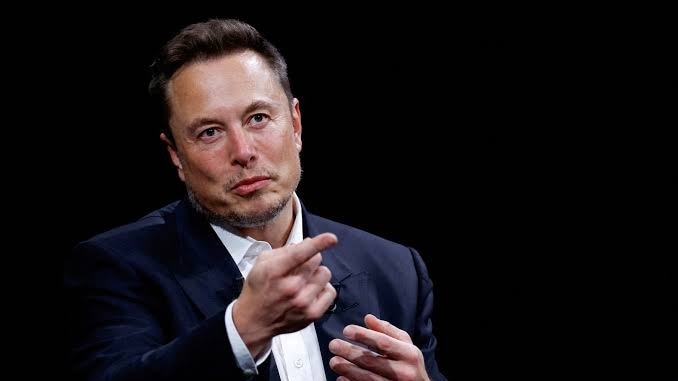
"AI + Robots will be able to do everything, resulting in universal high income. Work will be optional. From now on you will no longer need to work for the company" Elon Musk has said, setting forth his vision of a future in which machines may relieve mankind of the necessity of labour.
The tech tycoon, who has repeatedly spoken of the economic consequences of artificial intelligence, believes that the union of intelligent machines and robotics may alter the very foundations of human employment.
Speaking at the All-In Summit, Musk discussed the progress of artificial intelligence, Tesla's humanoid robot, Optimus, and the difficulties of developing machines capable of performing human tasks.
He observed that the future of robotics depended upon advances in hardware, software and the capacity of machines to comprehend and act upon the physical world. He did not, however, announce at that event the specific promise of a celebrity-level income for every person.
Musk's broader vision has been expressed through the term "universal high income", which he distinguishes from universal basic income.
The latter generally denotes a regular payment intended to provide people with a minimum level of financial security. Musk's conception goes further: he anticipates a condition in which the abundance produced by AI and robots could enable people to obtain far more goods and services than they can presently afford.
In a discussion with Peter Diamandis on the Moonshots podcast, Musk previously explained that there could eventually be "more digital intelligence than all human intelligence combined" and "more humanoid robots than all humans". In such a circumstance, he reasoned, machines might perform much of the labour now undertaken by human beings.
His prediction extends to both manual occupations and white-collar employment, particularly work that consists chiefly of processing information.
The implications are considerable. If machines undertake manufacturing, transport, agriculture and numerous administrative tasks, the cost of producing many goods could fall.
Musk has also argued that advances in artificial intelligence and robotics could make superior medical care accessible to everyone. These remain predictions, however, rather than established outcomes.
There is, moreover, a difficulty which this vision must confront. The displacement of workers may precede the arrival of the abundance Musk anticipates. Families whose livelihoods depend upon wages cannot readily live upon the promise of a future economy. Nor is it yet settled how the wealth generated by automated production would be distributed, or who would own the machines responsible for it.
Musk himself has acknowledged that the transition will be difficult. In the Moonshots discussion, he remarked, "This is going to be a bumpy ride." The observation offers a necessary qualification to his optimism.