4 min read
How Houthis found an unlikely weapon against Saudis in Epstein files
Houthies are projecting themselves as defenders of Islam against corrupt foreign influences, even Saudi Arabia, where the holiest site of Islam is situated.
By Edited by Sanstuti Nath
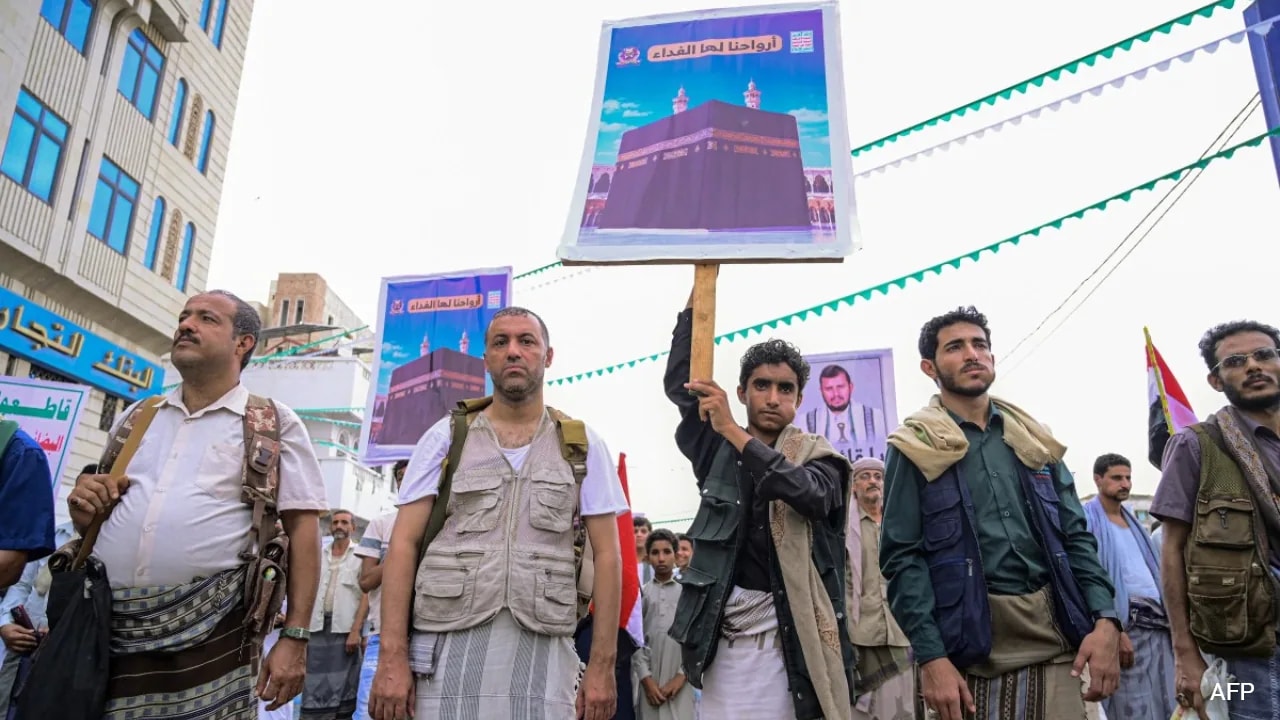
The Houthi militia in Yemen is pounding Saudi Arabia not just with missiles and drones but has also waged a propaganda war against the kingdom on social media, with a campaign built to defeat Saudis in their own pious game. A key figure in the group's smear campaign is Jeffrey Epstein, the dead American sex offender.
Houthis are homing in on reports showing that associates of the Saudi royal court sent tapestries that had draped the Kaaba in Mecca, the holiest site in Islam, to Epstein's private island to try and undermine Saudi Arabia's leaders and portray them as corrupt and unfit to guard the faith.
The Houthis control the majority of Yemen's population. According to a New York Times report, the rebels have profound awareness of their enemy's affairs and are willing to use that information to build support and target foes, including Saudi Arabia, which backs the internationally recognised Yemeni government they are fighting.
Houthies are projecting themselves as defenders of Islam against corrupt foreign influences, even Saudi Arabia, where the holiest site of Islam is situated.
The Trigger
Earlier this week, Saudi Arabia accused the Houthis of firing a drone at the Mecca and Medina regions, calling it a "heinous attack" and an attempt to provoke Muslims. The Houthis denied it.
In response, the Houthis turned the charge of religious betrayal back on the kingdom. Houthi president Mahdi al-Mashat said that those who gave the Kaaba's cover to Epstein are the ones targeting Mecca.
The message was echoed across the Houthi network, including in commentary by a Yemeni comedian with more than 270,000 followers on X and in a song by a traditional musician.
A Sophisticated Media Machine
Yemen analyst and founder of the risk advisory firm Basha Report, Mohammed al-Basha, who has tracked the group for more than 20 years, told The New York Times that the group's communications have grown from "a two-man crew" into an organised media system.
"They are very plugged in," al-Basha said, adding that the Houthi network now spans TV channels, websites, radio, newspapers, email campaigns, and official and unofficial social media accounts.
There is also a brigade of cultural influencers, a support network that is ideologically aligned with the group and other Iranian proxies but not necessarily paid, who help Houthies amplify a range of content in line with their ideology.
Why Epstein?
According to al-Basha, groups associated with Iran's "axis of resistance" are "obsessed" with Epstein, who serves as "shorthand for the corruption of the United States and Israel and is invoked to bolster antisemitic conspiracy theories that Jews and Zionists run the world."
Houthi leader Abdul-Malik al-Houthi often cites Epstein in speeches, including one this month marking the October 7, 2023 attack on Israel and another in September on the 2014 takeover of Sanaa.
In February, he said the Epstein files reveal a "Zionist incubator that trains leaders and elites."
Researcher Moustafa Ayad of the Institute for Strategic Dialogue told The New York Times the Houthis frame the Saudi fight as part of a broader war against the US and the "Epstein class", including Saudi leaders.
Linking Saudi rulers to America and Israel supports the claim that they are "one block", even though Riyadh has no diplomatic ties with Israel. US weapons were essential to Saudi Arabia's long bombing campaign in Yemen.
A Sharper Focus On Saudi Arabia
Houthi messaging went global after the group attacked Red Sea shipping in 2023 in alliance with Hamas.
Since the civil war reignited this summer, amid the US-Israeli war with Iran, the messaging has turned to Saudi Arabia and is "almost laser-focused on decimating" the standing of the kingdom's de facto ruler, Crown Prince Mohammed bin Salman, said Ayad.
The Humanitarian Theme
Houthi content also highlights Saudi Arabia's intervention in Yemen. A Saudi-led bombing campaign in support of the internationally recognised Yemeni government, which began in 2015, resulted in one of the world's worst humanitarian crises and contributed to the deaths of hundreds of thousands of people in Yemen from violence, hunger and disease.
When Saudi Foreign Minister Prince Faisal bin Farhan was filmed last month in New York being berated by an activist, a Houthi spokesman shared the clip on social media and wrote that Saudi Arabia is loathed globally "due to its crimes against Muslims and especially the savage massacres it committed in Yemen."
Borrowing from Iran
Ayad noted that some of the Houthis' content mimics Iran's propaganda approach. Iran has reached international audiences effectively since the US and Israel attacked it in late February.
Explosive Media, an Iranian group known for viral Lego videos, made a Lego retelling of Yemen's battles. It shows the Houthis storming a Saudi base with a golden Trump statue and ends with a commander sipping from a "mocha" mug, alluding to the capture of the port of Mokha.
The Saudi Messaging
The Saudi-backed Yemeni government is also involved in the propaganda mechanism but lacks unified messaging because its Presidential Leadership Council includes leaders with different ideologies and military affiliations. According to al-Basha, "There is no one voice."
This is helping the Houthi messaging reach seemingly unlikely sympathisers, at least some of whom share an obsession with conspiracy theories and Epstein.
One such person is Jake Shields, a retired mixed martial arts champion and popular right-wing podcaster and influencer, who the Southern Poverty Law Centre has accused of promoting "antisemitism, racism and bigotry". Shields posts about the Epstein files regularly, and on a recent episode of his show, he spoke about the fighting between the Houthis and Saudi Arabia, expressing admiration for the militia's resilience.
"I'm a big fan. I think they're kind of badass," he said of the Houthis.